

Experiences
Experiences
Go beyond simply visiting destinations. Our collection of local experiences invites you to immerse yourself in Japan’s culture, craftsmanship, cuisine, nature, and traditions through carefully selected activities designed to create lasting memories
Categories
Explore by Interest
Categories
Explore by Interest


VIP / Private access
Discover Japan with Private Access
VIP / Private access
Discover Japan with Private Access

Kansai
•
The Osaka Geihinkan is a working state guest house. Japan built it in 1995, inside the Nishinomaru Garden at Osaka Castle, for the leaders arriving for the APEC summit, and used it again in 2019 for the G20 Osaka Summit dinner. When you book it, you get the whole building. The site was chosen for the view. From the garden the castle keep stands almost directly ahead, framed by cherry trees that flower at the start of April. Inside, the main banquet room reproduces the White Drawing Room at Nijo Castle in Kyoto, down to the orikage coffered ceiling, the kind that used to signal the rank of whoever was sitting under it. The kitchen cooks French using Osaka ingredients: heirloom Naniwa vegetables, local A5 wagyu. Halal and allergy menus are standard here rather than a favour. One detail guests tend to remember. There is a gate called the Korai-mon that the public never uses. For banquets it is opened, so cars come in that way and stop at the door rather than at the park entrance. It is the same arrival a visiting head of state gets. Live music, a receiving line, whatever else the evening needs, can be built around that.
Kansai
•
The Osaka Geihinkan is a working state guest house. Japan built it in 1995, inside the Nishinomaru Garden at Osaka Castle, for the leaders arriving for the APEC summit, and used it again in 2019 for the G20 Osaka Summit dinner. When you book it, you get the whole building. The site was chosen for the view. From the garden the castle keep stands almost directly ahead, framed by cherry trees that flower at the start of April. Inside, the main banquet room reproduces the White Drawing Room at Nijo Castle in Kyoto, down to the orikage coffered ceiling, the kind that used to signal the rank of whoever was sitting under it. The kitchen cooks French using Osaka ingredients: heirloom Naniwa vegetables, local A5 wagyu. Halal and allergy menus are standard here rather than a favour. One detail guests tend to remember. There is a gate called the Korai-mon that the public never uses. For banquets it is opened, so cars come in that way and stop at the door rather than at the park entrance. It is the same arrival a visiting head of state gets. Live music, a receiving line, whatever else the evening needs, can be built around that.
Kansai
•
The Osaka Geihinkan is a working state guest house. Japan built it in 1995, inside the Nishinomaru Garden at Osaka Castle, for the leaders arriving for the APEC summit, and used it again in 2019 for the G20 Osaka Summit dinner. When you book it, you get the whole building. The site was chosen for the view. From the garden the castle keep stands almost directly ahead, framed by cherry trees that flower at the start of April. Inside, the main banquet room reproduces the White Drawing Room at Nijo Castle in Kyoto, down to the orikage coffered ceiling, the kind that used to signal the rank of whoever was sitting under it. The kitchen cooks French using Osaka ingredients: heirloom Naniwa vegetables, local A5 wagyu. Halal and allergy menus are standard here rather than a favour. One detail guests tend to remember. There is a gate called the Korai-mon that the public never uses. For banquets it is opened, so cars come in that way and stop at the door rather than at the park entrance. It is the same arrival a visiting head of state gets. Live music, a receiving line, whatever else the evening needs, can be built around that.

Kanto
•
Kiyosumi Garden: A 150-Year-Old Tokyo Garden, After Hours
Kiyosumi Garden is in Koto-ku, about fifteen minutes east of central Tokyo, and on most days it works as a public park. In the evening, once the gates close, it can be yours. The land was bought in 1878 by Iwasaki Yataro, who founded Mitsubishi and wanted somewhere to entertain his staff and his business guests. The garden was finished after he died. Water was drawn in from the Sumida River, and the family shipped in stones from all over Japan, enough of them and good enough that people began calling it the Garden of Famous Stones. Tokyo has since designated it a Place of Scenic Beauty. Dinner is in the Taisho Kinenkan, a hall on the edge of the pond with windows down one side. It seats about 100 for a course meal, or 130 for a standing reception. Before you sit down a guide can walk you round the garden, and drinks can be served on lawns that are normally roped off. Two things to look for on that walk. The stepping-stone path runs right at the surface of the water, close enough that the birds do not bother moving. And the Ryotei, a small teahouse the Iwasakis built in 1909 for a visiting British field marshal, leans out over the pond. The garden reads differently in each season. Cherry in early April, maples in late November.
Discover More

Kanto
•
Yokohama Museum: A Private Night at the Art Museum
The Yokohama Museum of Art opened in 1989 to a design by Kenzo Tange. It was built as the cultural anchor of Minato Mirai, the waterfront district Yokohama was developing at the time, and the architecture is the reason to hold an event here. The room you use is the Grand Gallery, the central atrium. It is symmetrical, very tall, and lit from above, and it holds up to 200 standing. There is enough floor for people to move around rather than stand in one clump. Attached to it is the Portico, the covered walkway that leads into the building. It is outdoors without being exposed, which makes it a good place for drinks on arrival and a safe one if the weather turns. Because this is a functioning museum, the current exhibition can be opened privately for your guests, without the queues. Getting there is easy. Three to five minutes on foot from Minatomirai Station, about ten from Sakuragicho, roughly half an hour from Haneda. The venue runs 09:00 to 21:00. Catering, multilingual staff, halal and allergy menus and barrier-free access are all in place. It suits a reception or a launch better than a formal seated dinner. The building rewards people walking around in it.
Discover More

Kansai
•
Heian Jingu Kaikan: Dinner Inside a Kyoto Shrine
Heian Jingu Kaikan stands inside the grounds of Heian Jingu in Kyoto, next to the Shin'en garden, and that garden is the reason the building is where it is. The Shin'en is a nationally designated Place of Scenic Beauty. It is a pond-strolling garden that borrows the Higashiyama hills as its backdrop and is fed by the Lake Biwa Canal, laid out by a group of gardeners working with techniques Kyoto had spent a thousand years refining. The Kaikan went up in 1969 for the shrine's 70th anniversary, with a copper irimoya roof that has weathered to green, and was refurbished in 2018. There are two halls. The Seihoden has about thirty metres of window facing the garden and seats 180. The Geihinden is smaller at 96, and looks out at the Taiheikaku bridge and the Shobikan pavilion. Take one hall for a small dinner, or the whole venue, which handles three hundred or more. That scale is rare in Kyoto, where most heritage sites cap out well below it. Food is Kyo-kaiseki, or a Japanese-French course if you prefer. Early April for the weeping cherry and late November for the maples are the obvious months, but the garden was designed to hold up in all four seasons, and the window-walls mean weather is never a problem.
Discover More
Kanto
•
Kiyosumi Garden: A 150-Year-Old Tokyo Garden, After Hours
Kiyosumi Garden is in Koto-ku, about fifteen minutes east of central Tokyo, and on most days it works as a public park. In the evening, once the gates close, it can be yours. The land was bought in 1878 by Iwasaki Yataro, who founded Mitsubishi and wanted somewhere to entertain his staff and his business guests. The garden was finished after he died. Water was drawn in from the Sumida River, and the family shipped in stones from all over Japan, enough of them and good enough that people began calling it the Garden of Famous Stones. Tokyo has since designated it a Place of Scenic Beauty. Dinner is in the Taisho Kinenkan, a hall on the edge of the pond with windows down one side. It seats about 100 for a course meal, or 130 for a standing reception. Before you sit down a guide can walk you round the garden, and drinks can be served on lawns that are normally roped off. Two things to look for on that walk. The stepping-stone path runs right at the surface of the water, close enough that the birds do not bother moving. And the Ryotei, a small teahouse the Iwasakis built in 1909 for a visiting British field marshal, leans out over the pond. The garden reads differently in each season. Cherry in early April, maples in late November.
Discover More
Kanto
•
Yokohama Museum: A Private Night at the Art Museum
The Yokohama Museum of Art opened in 1989 to a design by Kenzo Tange. It was built as the cultural anchor of Minato Mirai, the waterfront district Yokohama was developing at the time, and the architecture is the reason to hold an event here. The room you use is the Grand Gallery, the central atrium. It is symmetrical, very tall, and lit from above, and it holds up to 200 standing. There is enough floor for people to move around rather than stand in one clump. Attached to it is the Portico, the covered walkway that leads into the building. It is outdoors without being exposed, which makes it a good place for drinks on arrival and a safe one if the weather turns. Because this is a functioning museum, the current exhibition can be opened privately for your guests, without the queues. Getting there is easy. Three to five minutes on foot from Minatomirai Station, about ten from Sakuragicho, roughly half an hour from Haneda. The venue runs 09:00 to 21:00. Catering, multilingual staff, halal and allergy menus and barrier-free access are all in place. It suits a reception or a launch better than a formal seated dinner. The building rewards people walking around in it.
Discover More
Kansai
•
Heian Jingu Kaikan: Dinner Inside a Kyoto Shrine
Heian Jingu Kaikan stands inside the grounds of Heian Jingu in Kyoto, next to the Shin'en garden, and that garden is the reason the building is where it is. The Shin'en is a nationally designated Place of Scenic Beauty. It is a pond-strolling garden that borrows the Higashiyama hills as its backdrop and is fed by the Lake Biwa Canal, laid out by a group of gardeners working with techniques Kyoto had spent a thousand years refining. The Kaikan went up in 1969 for the shrine's 70th anniversary, with a copper irimoya roof that has weathered to green, and was refurbished in 2018. There are two halls. The Seihoden has about thirty metres of window facing the garden and seats 180. The Geihinden is smaller at 96, and looks out at the Taiheikaku bridge and the Shobikan pavilion. Take one hall for a small dinner, or the whole venue, which handles three hundred or more. That scale is rare in Kyoto, where most heritage sites cap out well below it. Food is Kyo-kaiseki, or a Japanese-French course if you prefer. Early April for the weeping cherry and late November for the maples are the obvious months, but the garden was designed to hold up in all four seasons, and the window-walls mean weather is never a problem.
Discover More
Kanto
•
Kiyosumi Garden: A 150-Year-Old Tokyo Garden, After Hours
Kiyosumi Garden is in Koto-ku, about fifteen minutes east of central Tokyo, and on most days it works as a public park. In the evening, once the gates close, it can be yours. The land was bought in 1878 by Iwasaki Yataro, who founded Mitsubishi and wanted somewhere to entertain his staff and his business guests. The garden was finished after he died. Water was drawn in from the Sumida River, and the family shipped in stones from all over Japan, enough of them and good enough that people began calling it the Garden of Famous Stones. Tokyo has since designated it a Place of Scenic Beauty. Dinner is in the Taisho Kinenkan, a hall on the edge of the pond with windows down one side. It seats about 100 for a course meal, or 130 for a standing reception. Before you sit down a guide can walk you round the garden, and drinks can be served on lawns that are normally roped off. Two things to look for on that walk. The stepping-stone path runs right at the surface of the water, close enough that the birds do not bother moving. And the Ryotei, a small teahouse the Iwasakis built in 1909 for a visiting British field marshal, leans out over the pond. The garden reads differently in each season. Cherry in early April, maples in late November.
Discover More
Kanto
•
Yokohama Museum: A Private Night at the Art Museum
The Yokohama Museum of Art opened in 1989 to a design by Kenzo Tange. It was built as the cultural anchor of Minato Mirai, the waterfront district Yokohama was developing at the time, and the architecture is the reason to hold an event here. The room you use is the Grand Gallery, the central atrium. It is symmetrical, very tall, and lit from above, and it holds up to 200 standing. There is enough floor for people to move around rather than stand in one clump. Attached to it is the Portico, the covered walkway that leads into the building. It is outdoors without being exposed, which makes it a good place for drinks on arrival and a safe one if the weather turns. Because this is a functioning museum, the current exhibition can be opened privately for your guests, without the queues. Getting there is easy. Three to five minutes on foot from Minatomirai Station, about ten from Sakuragicho, roughly half an hour from Haneda. The venue runs 09:00 to 21:00. Catering, multilingual staff, halal and allergy menus and barrier-free access are all in place. It suits a reception or a launch better than a formal seated dinner. The building rewards people walking around in it.
Discover More
Kansai
•
Heian Jingu Kaikan: Dinner Inside a Kyoto Shrine
Heian Jingu Kaikan stands inside the grounds of Heian Jingu in Kyoto, next to the Shin'en garden, and that garden is the reason the building is where it is. The Shin'en is a nationally designated Place of Scenic Beauty. It is a pond-strolling garden that borrows the Higashiyama hills as its backdrop and is fed by the Lake Biwa Canal, laid out by a group of gardeners working with techniques Kyoto had spent a thousand years refining. The Kaikan went up in 1969 for the shrine's 70th anniversary, with a copper irimoya roof that has weathered to green, and was refurbished in 2018. There are two halls. The Seihoden has about thirty metres of window facing the garden and seats 180. The Geihinden is smaller at 96, and looks out at the Taiheikaku bridge and the Shobikan pavilion. Take one hall for a small dinner, or the whole venue, which handles three hundred or more. That scale is rare in Kyoto, where most heritage sites cap out well below it. Food is Kyo-kaiseki, or a Japanese-French course if you prefer. Early April for the weeping cherry and late November for the maples are the obvious months, but the garden was designed to hold up in all four seasons, and the window-walls mean weather is never a problem.
Discover More
Cultural & Heritage
Experience Japan’s Living Heritage
Cultural & Heritage
Experience Japan’s Living Heritage

Tohoku
•
"In Yonezawa," the Nitta family likes to say, "the seasons are not four, but twenty-four." In this snow-country basin of Yamagata, deep in Japan's north, time has long been measured not in seasons but in fleeting micro-seasons — each with its own light and colour. In 1884, Ryūjirō Nitta, the sixteenth-generation head of a samurai family, chose cloth over the sword and opened a weaving workshop here. His descendants built on that choice: the second generation refined Yonezawa's ceremonial hakama; and in 1963, the third-generation head, Shūji, and his wife Tomiko rediscovered the safflower — once dismissed as a "phantom flower" — and spent years perfecting a technique of layering its dye ten times over to coax out a single, living red. Today, that craft is led by Gentarō Nitta, the fifth generation, who trained in the weaving quarter of Nishijin, Kyoto, before returning home in 2017 to take up the family's work — and its awards. You are received not at a factory, but inside the family's own tatami room, with a tea ritual of matcha and seasonal wagashi. Then, under Gentarō's guidance, you dye a silk scarf of your own in that same hard-won "Japan red," while he walks you through the working atelier his family has kept for five generations. What you carry home is a colour you made with your own hands, in the house it was born — and the family's quiet philosophy of "careful living": that true beauty comes not from speed, but attention.
Tohoku
•
"In Yonezawa," the Nitta family likes to say, "the seasons are not four, but twenty-four." In this snow-country basin of Yamagata, deep in Japan's north, time has long been measured not in seasons but in fleeting micro-seasons — each with its own light and colour. In 1884, Ryūjirō Nitta, the sixteenth-generation head of a samurai family, chose cloth over the sword and opened a weaving workshop here. His descendants built on that choice: the second generation refined Yonezawa's ceremonial hakama; and in 1963, the third-generation head, Shūji, and his wife Tomiko rediscovered the safflower — once dismissed as a "phantom flower" — and spent years perfecting a technique of layering its dye ten times over to coax out a single, living red. Today, that craft is led by Gentarō Nitta, the fifth generation, who trained in the weaving quarter of Nishijin, Kyoto, before returning home in 2017 to take up the family's work — and its awards. You are received not at a factory, but inside the family's own tatami room, with a tea ritual of matcha and seasonal wagashi. Then, under Gentarō's guidance, you dye a silk scarf of your own in that same hard-won "Japan red," while he walks you through the working atelier his family has kept for five generations. What you carry home is a colour you made with your own hands, in the house it was born — and the family's quiet philosophy of "careful living": that true beauty comes not from speed, but attention.
Tohoku
•
"In Yonezawa," the Nitta family likes to say, "the seasons are not four, but twenty-four." In this snow-country basin of Yamagata, deep in Japan's north, time has long been measured not in seasons but in fleeting micro-seasons — each with its own light and colour. In 1884, Ryūjirō Nitta, the sixteenth-generation head of a samurai family, chose cloth over the sword and opened a weaving workshop here. His descendants built on that choice: the second generation refined Yonezawa's ceremonial hakama; and in 1963, the third-generation head, Shūji, and his wife Tomiko rediscovered the safflower — once dismissed as a "phantom flower" — and spent years perfecting a technique of layering its dye ten times over to coax out a single, living red. Today, that craft is led by Gentarō Nitta, the fifth generation, who trained in the weaving quarter of Nishijin, Kyoto, before returning home in 2017 to take up the family's work — and its awards. You are received not at a factory, but inside the family's own tatami room, with a tea ritual of matcha and seasonal wagashi. Then, under Gentarō's guidance, you dye a silk scarf of your own in that same hard-won "Japan red," while he walks you through the working atelier his family has kept for five generations. What you carry home is a colour you made with your own hands, in the house it was born — and the family's quiet philosophy of "careful living": that true beauty comes not from speed, but attention.

Chubu
•
Just over the mountains from the old capitals of Kyoto and Nara lies Iga, a hidden basin ringed by peaks in what is now Mie Prefecture. It was this landscape — remote, defensible, and fiercely independent — that gave rise to the shinobi, the real ninja of Japanese history. Iga is recognized today as a Japan Heritage site, the "Ninja Homeland," within easy reach of Kyoto, Osaka and Nagoya, yet a world away from the crowds. The ninja of the movies and anime are largely fiction. You train under Genichi Mitsuhashi (Subjuct to available), a fifteenth-dan grandmaster of the Bujinkan and a fifth-dan instructor of Onshin-ryū certified by the Japan Ninja Council — and, more unusually, a scholar who earned an academic doctorate researching ninja and ninjutsu at the graduate school of Mie University. His own definition of the art, in his words, is that ninjutsu is less a fighting style than "a comprehensive technique for living, a comprehensive technique for survival" — something built up, generation after generation, from the accumulated relationship between the people of Iga and this land's nature. He teaches from a mountain dojo in Oku-Iga, in the deep valleys said to be the birthplace of Ishikawa Goemon, the most famous ninja-outlaw of Japanese legend. Training begins with the foundations — posture, breathing, focus, body control — and the philosophy behind them. You break for a shinobi's meal built on the same self-sufficiency the ninja themselves practiced: home-grown, organically farmed rice cooked over a wood-fired kamado, miso soup from a home vegetable garden, grilled fish, pickles and ninja tea. Then the training goes into the field, on a mission to an authentic mountain castle site, where you read the terrain, climb, and recover a hidden scroll as the ninja once did. You leave not with a souvenir, but with a genuine glimpse of one of Japan's most misunderstood traditions — taught by a master who has studied it both on the mat and in the academy — and the quiet, unbreakable mindset at its core.
Chubu
•
Just over the mountains from the old capitals of Kyoto and Nara lies Iga, a hidden basin ringed by peaks in what is now Mie Prefecture. It was this landscape — remote, defensible, and fiercely independent — that gave rise to the shinobi, the real ninja of Japanese history. Iga is recognized today as a Japan Heritage site, the "Ninja Homeland," within easy reach of Kyoto, Osaka and Nagoya, yet a world away from the crowds. The ninja of the movies and anime are largely fiction. You train under Genichi Mitsuhashi (Subjuct to available), a fifteenth-dan grandmaster of the Bujinkan and a fifth-dan instructor of Onshin-ryū certified by the Japan Ninja Council — and, more unusually, a scholar who earned an academic doctorate researching ninja and ninjutsu at the graduate school of Mie University. His own definition of the art, in his words, is that ninjutsu is less a fighting style than "a comprehensive technique for living, a comprehensive technique for survival" — something built up, generation after generation, from the accumulated relationship between the people of Iga and this land's nature. He teaches from a mountain dojo in Oku-Iga, in the deep valleys said to be the birthplace of Ishikawa Goemon, the most famous ninja-outlaw of Japanese legend. Training begins with the foundations — posture, breathing, focus, body control — and the philosophy behind them. You break for a shinobi's meal built on the same self-sufficiency the ninja themselves practiced: home-grown, organically farmed rice cooked over a wood-fired kamado, miso soup from a home vegetable garden, grilled fish, pickles and ninja tea. Then the training goes into the field, on a mission to an authentic mountain castle site, where you read the terrain, climb, and recover a hidden scroll as the ninja once did. You leave not with a souvenir, but with a genuine glimpse of one of Japan's most misunderstood traditions — taught by a master who has studied it both on the mat and in the academy — and the quiet, unbreakable mindset at its core.
Chubu
•
Just over the mountains from the old capitals of Kyoto and Nara lies Iga, a hidden basin ringed by peaks in what is now Mie Prefecture. It was this landscape — remote, defensible, and fiercely independent — that gave rise to the shinobi, the real ninja of Japanese history. Iga is recognized today as a Japan Heritage site, the "Ninja Homeland," within easy reach of Kyoto, Osaka and Nagoya, yet a world away from the crowds. The ninja of the movies and anime are largely fiction. You train under Genichi Mitsuhashi (Subjuct to available), a fifteenth-dan grandmaster of the Bujinkan and a fifth-dan instructor of Onshin-ryū certified by the Japan Ninja Council — and, more unusually, a scholar who earned an academic doctorate researching ninja and ninjutsu at the graduate school of Mie University. His own definition of the art, in his words, is that ninjutsu is less a fighting style than "a comprehensive technique for living, a comprehensive technique for survival" — something built up, generation after generation, from the accumulated relationship between the people of Iga and this land's nature. He teaches from a mountain dojo in Oku-Iga, in the deep valleys said to be the birthplace of Ishikawa Goemon, the most famous ninja-outlaw of Japanese legend. Training begins with the foundations — posture, breathing, focus, body control — and the philosophy behind them. You break for a shinobi's meal built on the same self-sufficiency the ninja themselves practiced: home-grown, organically farmed rice cooked over a wood-fired kamado, miso soup from a home vegetable garden, grilled fish, pickles and ninja tea. Then the training goes into the field, on a mission to an authentic mountain castle site, where you read the terrain, climb, and recover a hidden scroll as the ninja once did. You leave not with a souvenir, but with a genuine glimpse of one of Japan's most misunderstood traditions — taught by a master who has studied it both on the mat and in the academy — and the quiet, unbreakable mindset at its core.

Kansai
•
Nishijin is Kyoto's old weaving quarter, its lanes home to the city's finest silk for centuries. At its heart stands Tondaya — today the "Nishijin Museum of Living," but for generations a great merchant house, and still a family home. Its story begins with Tōbei, a Fushimi money changer and patron of Noh theatre, who kept a stage in his house — why a rare Noh stage room survives at Tondaya today. Fire destroyed the family's home in 1868; they rebuilt in Nishijin, raising in 1885 the head house that still stands, near "Senryō-ga-tsuji," where a thousand ryō of silk changed hands daily. Each generation since has taken Tōbei's name and added to the house: six gardens, three tea rooms, two wells, three storehouses, and that same Noh stage — one tea room built under a Mushanokōji Senke master's guidance. The current Tōbei — the thirteenth, Mineko Tanaka — took over in 1988. A licensed teacher since 1976, she has taught Japanese manners and old Kyoto life to over a thousand students, and founded her own kimono school in 1993. Her lesson is simple: that beauty of body and spirit are one discipline — and that, more than the building, is what Tondaya passes on. Your visit begins as her guest: a skilled dresser robes you in an authentic silk kimono of Nishijin, and you tour the machiya privately among its gardens and grand rooms — not a costume rental, but an hour inside a home a family has kept, and taught from, for thirteen generations.
Kansai
•
Nishijin is Kyoto's old weaving quarter, its lanes home to the city's finest silk for centuries. At its heart stands Tondaya — today the "Nishijin Museum of Living," but for generations a great merchant house, and still a family home. Its story begins with Tōbei, a Fushimi money changer and patron of Noh theatre, who kept a stage in his house — why a rare Noh stage room survives at Tondaya today. Fire destroyed the family's home in 1868; they rebuilt in Nishijin, raising in 1885 the head house that still stands, near "Senryō-ga-tsuji," where a thousand ryō of silk changed hands daily. Each generation since has taken Tōbei's name and added to the house: six gardens, three tea rooms, two wells, three storehouses, and that same Noh stage — one tea room built under a Mushanokōji Senke master's guidance. The current Tōbei — the thirteenth, Mineko Tanaka — took over in 1988. A licensed teacher since 1976, she has taught Japanese manners and old Kyoto life to over a thousand students, and founded her own kimono school in 1993. Her lesson is simple: that beauty of body and spirit are one discipline — and that, more than the building, is what Tondaya passes on. Your visit begins as her guest: a skilled dresser robes you in an authentic silk kimono of Nishijin, and you tour the machiya privately among its gardens and grand rooms — not a costume rental, but an hour inside a home a family has kept, and taught from, for thirteen generations.
Kansai
•
Nishijin is Kyoto's old weaving quarter, its lanes home to the city's finest silk for centuries. At its heart stands Tondaya — today the "Nishijin Museum of Living," but for generations a great merchant house, and still a family home. Its story begins with Tōbei, a Fushimi money changer and patron of Noh theatre, who kept a stage in his house — why a rare Noh stage room survives at Tondaya today. Fire destroyed the family's home in 1868; they rebuilt in Nishijin, raising in 1885 the head house that still stands, near "Senryō-ga-tsuji," where a thousand ryō of silk changed hands daily. Each generation since has taken Tōbei's name and added to the house: six gardens, three tea rooms, two wells, three storehouses, and that same Noh stage — one tea room built under a Mushanokōji Senke master's guidance. The current Tōbei — the thirteenth, Mineko Tanaka — took over in 1988. A licensed teacher since 1976, she has taught Japanese manners and old Kyoto life to over a thousand students, and founded her own kimono school in 1993. Her lesson is simple: that beauty of body and spirit are one discipline — and that, more than the building, is what Tondaya passes on. Your visit begins as her guest: a skilled dresser robes you in an authentic silk kimono of Nishijin, and you tour the machiya privately among its gardens and grand rooms — not a costume rental, but an hour inside a home a family has kept, and taught from, for thirteen generations.
Culinary & Food
Experience Japan Through Food
Culinary & Food
Experience Japan Through Food

Kanto
•
Kansai
•
Kobe Beef, from Farm to Table: A Private Wagyu Experience in the Hills of Hyogo
Kanto
•
Kansai
•
Kobe Beef, from Farm to Table: A Private Wagyu Experience in the Hills of Hyogo
Kanto
•
Kansai
•
Kobe Beef, from Farm to Table: A Private Wagyu Experience in the Hills of Hyogo
Kanto
•
Kansai
•
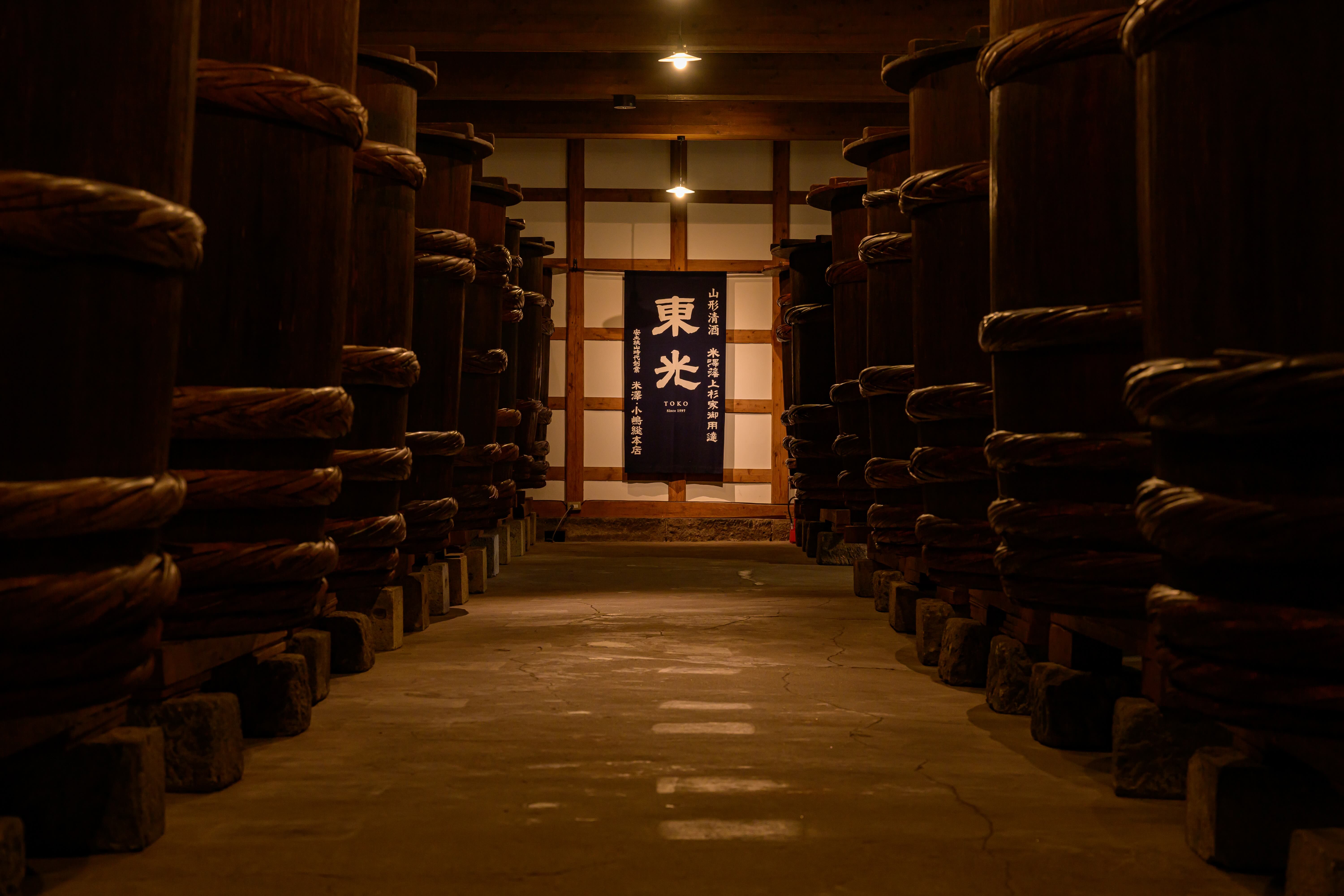
Four Centuries of Sake: A Private Audience with a Master Brewer of Yonezawa's Snow Country
Kanto
•
Kansai
•
Four Centuries of Sake: A Private Audience with a Master Brewer of Yonezawa's Snow Country
Kanto
•
Kansai
•
Four Centuries of Sake: A Private Audience with a Master Brewer of Yonezawa's Snow Country
Nature & Outdoors
Explore Japan’s Wild & Scenic Landscapes
Nature & Outdoors
Explore Japan’s Wild & Scenic Landscapes
Chubu
•
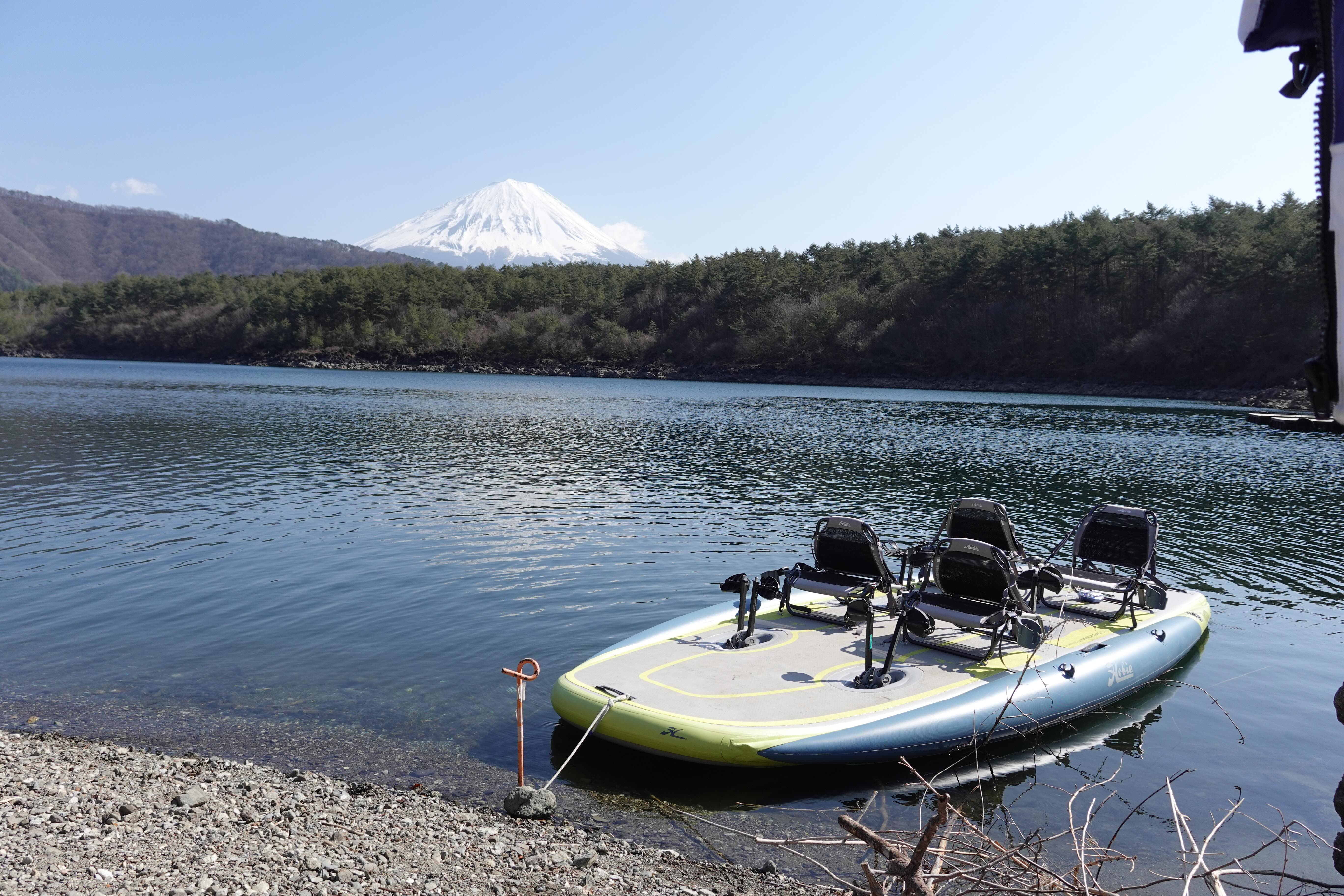
Of the Fuji Five Lakes, Lake Sai is one of the quiet ones. It was born of fire: when Mount Fuji erupted in the ninth century, a vast lava flow poured down and split a single ancient lake in two, leaving Lake Sai on one side and Lake Shoji on the other. The lava that divided them is the ground beneath the Aokigahara forest that now wraps the shore, and the three lakes are still said to be linked by water running underground. Today the lake sits within Fuji-Hakone-Izu National Park, ringed by dark volcanic rock and deep green, with Mount Fuji rising beyond. This is a place to move gently. Your boat is the Hobie Mirage iTrek Fiesta — a four-person pedal craft you'll find nowhere else in Japan, with seats that face one another so your group travels together, knee to knee, out on the water. There is no motor and no paddle-splash: you power it entirely with your legs, gliding forward under nothing but your own effort. On a lake shaped and protected by nature, it is a way to travel that leaves no engine noise, no fuel and no wake behind you. Out on the water, the experience becomes part cruise, part lesson. You pedal across the lake beneath the great nature at the foot of Mount Fuji, tracing shores of lava rock and forest that most visitors only ever see from the road. Your guide shows you how to read the water — where the wind is coming from, and how to move with it rather than against it — so that a first time on the lake feels less like a rental and more like learning, briefly, to belong to the place. Afterwards, you return to base for a break on the wood deck, the mountain still watching over the water.
Chubu
•
Of the Fuji Five Lakes, Lake Sai is one of the quiet ones. It was born of fire: when Mount Fuji erupted in the ninth century, a vast lava flow poured down and split a single ancient lake in two, leaving Lake Sai on one side and Lake Shoji on the other. The lava that divided them is the ground beneath the Aokigahara forest that now wraps the shore, and the three lakes are still said to be linked by water running underground. Today the lake sits within Fuji-Hakone-Izu National Park, ringed by dark volcanic rock and deep green, with Mount Fuji rising beyond. This is a place to move gently. Your boat is the Hobie Mirage iTrek Fiesta — a four-person pedal craft you'll find nowhere else in Japan, with seats that face one another so your group travels together, knee to knee, out on the water. There is no motor and no paddle-splash: you power it entirely with your legs, gliding forward under nothing but your own effort. On a lake shaped and protected by nature, it is a way to travel that leaves no engine noise, no fuel and no wake behind you. Out on the water, the experience becomes part cruise, part lesson. You pedal across the lake beneath the great nature at the foot of Mount Fuji, tracing shores of lava rock and forest that most visitors only ever see from the road. Your guide shows you how to read the water — where the wind is coming from, and how to move with it rather than against it — so that a first time on the lake feels less like a rental and more like learning, briefly, to belong to the place. Afterwards, you return to base for a break on the wood deck, the mountain still watching over the water.
Chubu
•
Of the Fuji Five Lakes, Lake Sai is one of the quiet ones. It was born of fire: when Mount Fuji erupted in the ninth century, a vast lava flow poured down and split a single ancient lake in two, leaving Lake Sai on one side and Lake Shoji on the other. The lava that divided them is the ground beneath the Aokigahara forest that now wraps the shore, and the three lakes are still said to be linked by water running underground. Today the lake sits within Fuji-Hakone-Izu National Park, ringed by dark volcanic rock and deep green, with Mount Fuji rising beyond. This is a place to move gently. Your boat is the Hobie Mirage iTrek Fiesta — a four-person pedal craft you'll find nowhere else in Japan, with seats that face one another so your group travels together, knee to knee, out on the water. There is no motor and no paddle-splash: you power it entirely with your legs, gliding forward under nothing but your own effort. On a lake shaped and protected by nature, it is a way to travel that leaves no engine noise, no fuel and no wake behind you. Out on the water, the experience becomes part cruise, part lesson. You pedal across the lake beneath the great nature at the foot of Mount Fuji, tracing shores of lava rock and forest that most visitors only ever see from the road. Your guide shows you how to read the water — where the wind is coming from, and how to move with it rather than against it — so that a first time on the lake feels less like a rental and more like learning, briefly, to belong to the place. Afterwards, you return to base for a break on the wood deck, the mountain still watching over the water.

Chubu
•
Most people meet Mount Fuji from a distance — from a train window, a viewpoint, a crowded overlook. This is the other way to meet it: from the saddle of a bike, on the quieter western foot of the mountain in Fujinomiya, where forest, farmland and lakes spread out beneath the peak inside Fuji-Hakone-Izu National Park. Here the mountain is not a backdrop but a place you move through, at the pace of your own legs. That is the heart of this ride. You travel about 25 kilometres of forest paths, back roads and lakeshore under your own pedal power — the electric assist is there only to even out the hills, so the climbs (around 200 metres of gentle gain) never become the point. It means active beginners and families can keep up and go further, deeper into scenery that most visitors only ever glimpse from the road, without a motor and without a crowd. A private local guide rides with you the whole way, and the route bends to the weather, the season and your group's own pace. Along the way, the landscape does the talking. You pause at a sacred waterfall that forms part of Mount Fuji's World Heritage Site, and at Lake Tanuki, where on a still morning the whole mountain lies mirrored on the water. In the warmer months, there is a hidden waterfall to swim beneath, far from the crowds. And when it's time to rest, lunch is a local meal, with a glass of locally brewed craft beer or Japanese green tea to finish. It is a full, unhurried day — Mount Fuji not watched, but explored, one turn of the pedals at a time.
Chubu
•
Most people meet Mount Fuji from a distance — from a train window, a viewpoint, a crowded overlook. This is the other way to meet it: from the saddle of a bike, on the quieter western foot of the mountain in Fujinomiya, where forest, farmland and lakes spread out beneath the peak inside Fuji-Hakone-Izu National Park. Here the mountain is not a backdrop but a place you move through, at the pace of your own legs. That is the heart of this ride. You travel about 25 kilometres of forest paths, back roads and lakeshore under your own pedal power — the electric assist is there only to even out the hills, so the climbs (around 200 metres of gentle gain) never become the point. It means active beginners and families can keep up and go further, deeper into scenery that most visitors only ever glimpse from the road, without a motor and without a crowd. A private local guide rides with you the whole way, and the route bends to the weather, the season and your group's own pace. Along the way, the landscape does the talking. You pause at a sacred waterfall that forms part of Mount Fuji's World Heritage Site, and at Lake Tanuki, where on a still morning the whole mountain lies mirrored on the water. In the warmer months, there is a hidden waterfall to swim beneath, far from the crowds. And when it's time to rest, lunch is a local meal, with a glass of locally brewed craft beer or Japanese green tea to finish. It is a full, unhurried day — Mount Fuji not watched, but explored, one turn of the pedals at a time.
Chubu
•
Most people meet Mount Fuji from a distance — from a train window, a viewpoint, a crowded overlook. This is the other way to meet it: from the saddle of a bike, on the quieter western foot of the mountain in Fujinomiya, where forest, farmland and lakes spread out beneath the peak inside Fuji-Hakone-Izu National Park. Here the mountain is not a backdrop but a place you move through, at the pace of your own legs. That is the heart of this ride. You travel about 25 kilometres of forest paths, back roads and lakeshore under your own pedal power — the electric assist is there only to even out the hills, so the climbs (around 200 metres of gentle gain) never become the point. It means active beginners and families can keep up and go further, deeper into scenery that most visitors only ever glimpse from the road, without a motor and without a crowd. A private local guide rides with you the whole way, and the route bends to the weather, the season and your group's own pace. Along the way, the landscape does the talking. You pause at a sacred waterfall that forms part of Mount Fuji's World Heritage Site, and at Lake Tanuki, where on a still morning the whole mountain lies mirrored on the water. In the warmer months, there is a hidden waterfall to swim beneath, far from the crowds. And when it's time to rest, lunch is a local meal, with a glass of locally brewed craft beer or Japanese green tea to finish. It is a full, unhurried day — Mount Fuji not watched, but explored, one turn of the pedals at a time.
Staycation (Ryokan)
Escape to Japan’s Finest Ryokan Stays
Staycation (Ryokan)
Escape to Japan’s Finest Ryokan Stays

Shikoku
•
Ozu Castle is the only castle keep in Japan you can book a night in. It stands above Ozu, a small town in Ehime on Shikoku, where the Hiji River loops through a valley people here call Garyu, the reclining dragon. The keep was dismantled in the Meiji period and rebuilt in 2004. Not in concrete, which is what most Japanese castles got, but in wood, worked out from surviving sketch maps, a carpenter's scale model and photographs taken in 1877. The joinery uses no metal nails. UNESCO listed that carpentry as Intangible Cultural Heritage in 2020. Forty percent of the money came from Ozu residents. Overnight, the keep, the two original turrets, both Important Cultural Properties, the hill and the bath are closed to everyone but you, your butler and your chef. The arrival is staged. You are met at the gate, dressed in armour and walked in, and gagaku is performed under the floodlit tower. Dinner is reconstructed from the Kato family's records and served on local Tobeyaki ware. There is a nightcap in the moon-viewing turret. Then you sleep in the keep, on cypress. Breakfast is at Garyu Sanso, a villa down by the river listed in the Michelin Green Guide. The Edo and Meiji merchant streets in town are worth an hour afterwards.
Shikoku
•
Ozu Castle is the only castle keep in Japan you can book a night in. It stands above Ozu, a small town in Ehime on Shikoku, where the Hiji River loops through a valley people here call Garyu, the reclining dragon. The keep was dismantled in the Meiji period and rebuilt in 2004. Not in concrete, which is what most Japanese castles got, but in wood, worked out from surviving sketch maps, a carpenter's scale model and photographs taken in 1877. The joinery uses no metal nails. UNESCO listed that carpentry as Intangible Cultural Heritage in 2020. Forty percent of the money came from Ozu residents. Overnight, the keep, the two original turrets, both Important Cultural Properties, the hill and the bath are closed to everyone but you, your butler and your chef. The arrival is staged. You are met at the gate, dressed in armour and walked in, and gagaku is performed under the floodlit tower. Dinner is reconstructed from the Kato family's records and served on local Tobeyaki ware. There is a nightcap in the moon-viewing turret. Then you sleep in the keep, on cypress. Breakfast is at Garyu Sanso, a villa down by the river listed in the Michelin Green Guide. The Edo and Meiji merchant streets in town are worth an hour afterwards.
Shikoku
•
Ozu Castle is the only castle keep in Japan you can book a night in. It stands above Ozu, a small town in Ehime on Shikoku, where the Hiji River loops through a valley people here call Garyu, the reclining dragon. The keep was dismantled in the Meiji period and rebuilt in 2004. Not in concrete, which is what most Japanese castles got, but in wood, worked out from surviving sketch maps, a carpenter's scale model and photographs taken in 1877. The joinery uses no metal nails. UNESCO listed that carpentry as Intangible Cultural Heritage in 2020. Forty percent of the money came from Ozu residents. Overnight, the keep, the two original turrets, both Important Cultural Properties, the hill and the bath are closed to everyone but you, your butler and your chef. The arrival is staged. You are met at the gate, dressed in armour and walked in, and gagaku is performed under the floodlit tower. Dinner is reconstructed from the Kato family's records and served on local Tobeyaki ware. There is a nightcap in the moon-viewing turret. Then you sleep in the keep, on cypress. Breakfast is at Garyu Sanso, a villa down by the river listed in the Michelin Green Guide. The Edo and Meiji merchant streets in town are worth an hour afterwards.
Shikoku
•
Ozu Castle Stay (Sleep Inside a Real Japanese Castle)
Ozu Castle is the only castle keep in Japan you can book a night in. It stands above Ozu, a small town in Ehime on Shikoku, where the Hiji River loops through a valley people here call Garyu, the reclining dragon. The keep was dismantled in the Meiji period and rebuilt in 2004. Not in concrete, which is what most Japanese castles got, but in wood, worked out from surviving sketch maps, a carpenter's scale model and photographs taken in 1877. The joinery uses no metal nails. UNESCO listed that carpentry as Intangible Cultural Heritage in 2020. Forty percent of the money came from Ozu residents. Overnight, the keep, the two original turrets, both Important Cultural Properties, the hill and the bath are closed to everyone but you, your butler and your chef. The arrival is staged. You are met at the gate, dressed in armour and walked in, and gagaku is performed under the floodlit tower. Dinner is reconstructed from the Kato family's records and served on local Tobeyaki ware. There is a nightcap in the moon-viewing turret. Then you sleep in the keep, on cypress. Breakfast is at Garyu Sanso, a villa down by the river listed in the Michelin Green Guide. The Edo and Meiji merchant streets in town are worth an hour afterwards.
Discover More

Chugoku
•
Fukuyama Castle Stay: Lord of the Castle for a Night
Fukuyama Castle Park sits beside Fukuyama Station in Hiroshima Prefecture, which is part of what makes the arrangement odd. For one night the whole park closes and there is nobody in it but you. Several of the buildings inside are nationally designated Important Cultural Properties. The role you are given is lord of the castle, and the evening is built around that rather than around sightseeing. You bathe in the Oyudono, the lord's bathhouse, which went unused for centuries before it was brought back. It is an Edo design, closer to a steam room than a hot bath, so it takes a few minutes to settle into. Dinner began as a thought experiment. When Perry's delegation landed at Uraga in 1853, the man who received them was Masahiro Abe, lord of Fukuyama. Had they come to Fukuyama instead, what would he have put in front of them? The chef worked from period recipes and local ingredients to answer that. There is more in the area than most visitors realise. Noh and other performing arts are still active here, Tomonoura is a short drive along the coast, Kinoshita-Tenjin Shrine is quiet even in season, and several streets of merchant houses survive intact. A concierge builds the rest of the stay around what you want to see.
Discover More

Shikoku
•
Marugame Castle Experience: A 400-Year-Old Castle, Yours for a Night)
Marugame Castle stands on a wooded hill called Kameyama, above the town of Marugame in Kagawa, on Shikoku. It has been there for over four hundred years. Two things make it unusual. The wooden keep is original, one of only twelve left in Japan and the oldest on Shikoku. And the stone walls holding it up are the tallest of any castle in the country. The Kyogoku family held Marugame for two centuries. For one night the castle, the gate and the ramparts are closed to everyone but you. You come in through the Taikomon, the drum gate built in 1670. A drum has marked the hours there since the Edo period, and when it sounds for your arrival the Marugame Taiko group starts up. Dinner is at Enjyukaku Bekkan, looking down over the old castle town, built from dishes in the Kyogoku household records and whatever the Seto Inland Sea has that week. Afterwards the keep itself opens as a private bar. You sleep at Enjyukaku Bekkan as well. It is a single-storey wooden house put up in 1933 using material from the Kyogoku family's Tokyo residence, and the ceilings, transoms and metalwork all came with it. Breakfast is at a teahouse inside Nakazu Bansho-en, a daimyo garden ten minutes away.
Discover More

Kanto
•
GORA KADAN: A Relais & Châteaux ryokan on a former imperial estate in Hakone's Gora
GORA KADAN stands on land that belonged to the Kan'in-no-miya, one of Japan's imperial families. The villa they built here in the early Showa years is still standing, and it is where dinner is served. The ryokan is a Relais & Châteaux house and carries its inheritance without making a fuss about it. Pale wood corridors, traditional materials cut on modern lines, and a garden that was a private imperial garden a century ago. Three springs feed the baths, two of them rising inside the garden itself, and the water is gently alkaline. Many rooms have their own open-air bath. There is a large public bath that changes over at night, and a private open-air bath you can reserve, filled straight from the source, with a steam sauna beside it. There is also an indoor pool built like an orangerie, a warm-stone sauna and a spa. Dinner is kaiseki in the old villa, and the menu turns over with the month. Sushi Kadan, the counter, is there if you would rather eat that way. Gora is high on the Hakone slope, inside the national park, under two hours from Tokyo by car. The switchback railway, the cable car and the art museums are a short way down the hill.
Discover More

Chubu
•
THE HIRAMATSU ATAMI: A 13-room sukiya retreat above Sagami Bay, a short private drive from Tokyo
Atami has been a hot-spring town for about fifteen hundred years, on the Sagami Bay coast, and it has stayed in fashion through the shogun era and the whole of the twentieth century. It is still the quickest real escape from Tokyo: about ninety minutes by road. THE HIRAMATSU sits on a headland above the bay. The building went up in the 1980s as a private state guest house, in sukiya style, by the master carpenter Koichi Kinoshita, and only became a hotel later. That history shows in what is absent. No gloss, no ornament. Plain wood, tea-room proportions, and terraces where the water sits still enough to hold the sky. Thirteen rooms, every one facing the sea. Each has its own bath fed by Atami's spring water: a granite tub half open to the air beside a wide window in most rooms, and in the two suites a bath set in a garden with nothing overhead. Dinner is French, which is the surprise. It is served in a sukiya dining room above the water, built on kinmedai landed at Atami, Amagi black pork and black truffle, from a cellar the house is quietly proud of. A Japanese building with a French kitchen in it sounds like it should not work. It does.
Discover More

Kanto
•
Hakone Gora KARAKU: Private open-air onsen hotel in the Hakone highlands, under two hours from Tokyo
In Hakone, the mountains are the main event — and Gora is where you climb up into them to rest. KARAKU stands in Gora, the okuzashiki — the quiet inner sanctuary — of Hakone, high in the Fuji-Hakone-Izu National Park yet less than 100 km from Tokyo — under two hours by road. From here the Hakone range rolls away toward Sagami Bay, the seasons turn in full colour, and the volcanic valleys and lakes that made this one of Japan's great hot-spring retreats lie just beyond the ridgelines. Gora itself is a hillside of sights — the switchback mountain railway and cable car, gardens and art museums — all within easy reach for the days around your stay. This is a house built around the bath. Your room comes with its own private open-air hot spring — and each way to soak here has its own character. The observation baths, among the largest in Gora, open wide onto the mountains; the private baths, reserved just for you, wrap you in quiet; and your own room's spring is there at any hour, with no one to wait for. Bathe where the mood takes you. Between soaks there are terraces laced with water and light, a bamboo forest walk, and a guest lounge where drinks and light bites are simply there for the taking. When evening comes, the mountain sets the table: seasonal kaiseki at the main dining room, from a kitchen led by a chef whose career runs through celebrated houses — the Imperial Hotel among them — and the service of distinguished guests; or premium meat and seafood grilled before you on the annex's top floor, looking out to Mount Myojogatake. This is a one-night stay built around doing beautifully little — arrive, bathe, dine, and let the mountain quiet do the rest.
Discover More

Kanto
•
LIEN: Private ocean-view onsen villas on Chiba's Boso coast, barely two hours from Tokyo
Some stays are measured not by how much you see, but by how completely you stop. LIEN sits on the Futomi shore of Kamogawa, in Chiba — barely two hours from central Tokyo, yet a world away, with the Pacific opening out in front and the green Minegoka hills rising behind. It is a small house of just ten detached villas, and every one has its own private open-air hot spring. No communal bathhouse, no waiting, no other guests in sight — only you, the rising steam, and the changing blue beyond the rail. The name LIEN comes from the French word for "bond." It reflects how this house sees hospitality: not the greeting of a passing traveller, but the keeping of a genuine connection — with its guests, and with the sea and mountains that feed its table. LIEN began as a fish shop, and that trade still shows on the plate: the finest of the Boso catch, served course by course in the quiet of your own private dining. A night here is short on programme. You arrive, you bathe, you eat, you sleep with the sea audible through the window, you bathe again in the morning, and breakfast is not at a fixed time. That is all of it. It suits people who have been moving for a week and need to stop, which usually means after Tokyo rather than before it.
Discover More
Feature

Kansai
•
ROKU KYOTO, LXR Hotels & Resorts: A natural hot-spring resort in the wooded Takagamine hills of northern Kyoto, within walking distance of Kinkaku-ji
Most of Kyoto's visitors never make it this far north. ROKU stands in Takagamine, in the wooded hills of Rakuhoku, held between three mountain peaks and threaded by the clear Tenjin River. Its name carries the place twice over: roku, the foot of the mountains, and roku, to strain paper — for this river was once the Kamiyagawa, where papermakers worked its waters a thousand years ago. It is the Asian flagship of LXR — Hilton's collection of one-of-a-kind luxury houses — and a Forbes Travel Guide five-star hotel. Yet what people remember is something quieter, and rarer: an outdoor thermal pool fed by natural hot spring, open in every season, where you swim in swimwear beneath the open sky — together, not parted for separate baths — and watch the steam lift into the cold on a winter's morning. A hot spring you can swim in is a rare thing in Japan; here, it is the heart of the place. Low, contemporary architecture steps down toward the river, and the forest comes right to the window. And here is the secret most visitors miss: the Golden Pavilion of Kinkaku-ji is only about fifteen minutes away on foot — close enough to walk over as the gates open, ahead of the crowds, or the moment the first snow falls. With two nights here, the quiet north of Kyoto opens up around you.
Discover More
Shikoku
•
Ozu Castle Stay (Sleep Inside a Real Japanese Castle)
Ozu Castle is the only castle keep in Japan you can book a night in. It stands above Ozu, a small town in Ehime on Shikoku, where the Hiji River loops through a valley people here call Garyu, the reclining dragon. The keep was dismantled in the Meiji period and rebuilt in 2004. Not in concrete, which is what most Japanese castles got, but in wood, worked out from surviving sketch maps, a carpenter's scale model and photographs taken in 1877. The joinery uses no metal nails. UNESCO listed that carpentry as Intangible Cultural Heritage in 2020. Forty percent of the money came from Ozu residents. Overnight, the keep, the two original turrets, both Important Cultural Properties, the hill and the bath are closed to everyone but you, your butler and your chef. The arrival is staged. You are met at the gate, dressed in armour and walked in, and gagaku is performed under the floodlit tower. Dinner is reconstructed from the Kato family's records and served on local Tobeyaki ware. There is a nightcap in the moon-viewing turret. Then you sleep in the keep, on cypress. Breakfast is at Garyu Sanso, a villa down by the river listed in the Michelin Green Guide. The Edo and Meiji merchant streets in town are worth an hour afterwards.
Discover More
Chugoku
•
Fukuyama Castle Stay: Lord of the Castle for a Night
Fukuyama Castle Park sits beside Fukuyama Station in Hiroshima Prefecture, which is part of what makes the arrangement odd. For one night the whole park closes and there is nobody in it but you. Several of the buildings inside are nationally designated Important Cultural Properties. The role you are given is lord of the castle, and the evening is built around that rather than around sightseeing. You bathe in the Oyudono, the lord's bathhouse, which went unused for centuries before it was brought back. It is an Edo design, closer to a steam room than a hot bath, so it takes a few minutes to settle into. Dinner began as a thought experiment. When Perry's delegation landed at Uraga in 1853, the man who received them was Masahiro Abe, lord of Fukuyama. Had they come to Fukuyama instead, what would he have put in front of them? The chef worked from period recipes and local ingredients to answer that. There is more in the area than most visitors realise. Noh and other performing arts are still active here, Tomonoura is a short drive along the coast, Kinoshita-Tenjin Shrine is quiet even in season, and several streets of merchant houses survive intact. A concierge builds the rest of the stay around what you want to see.
Discover More
Shikoku
•
Marugame Castle Experience: A 400-Year-Old Castle, Yours for a Night)
Marugame Castle stands on a wooded hill called Kameyama, above the town of Marugame in Kagawa, on Shikoku. It has been there for over four hundred years. Two things make it unusual. The wooden keep is original, one of only twelve left in Japan and the oldest on Shikoku. And the stone walls holding it up are the tallest of any castle in the country. The Kyogoku family held Marugame for two centuries. For one night the castle, the gate and the ramparts are closed to everyone but you. You come in through the Taikomon, the drum gate built in 1670. A drum has marked the hours there since the Edo period, and when it sounds for your arrival the Marugame Taiko group starts up. Dinner is at Enjyukaku Bekkan, looking down over the old castle town, built from dishes in the Kyogoku household records and whatever the Seto Inland Sea has that week. Afterwards the keep itself opens as a private bar. You sleep at Enjyukaku Bekkan as well. It is a single-storey wooden house put up in 1933 using material from the Kyogoku family's Tokyo residence, and the ceilings, transoms and metalwork all came with it. Breakfast is at a teahouse inside Nakazu Bansho-en, a daimyo garden ten minutes away.
Discover More
Kanto
•
GORA KADAN: A Relais & Châteaux ryokan on a former imperial estate in Hakone's Gora
GORA KADAN stands on land that belonged to the Kan'in-no-miya, one of Japan's imperial families. The villa they built here in the early Showa years is still standing, and it is where dinner is served. The ryokan is a Relais & Châteaux house and carries its inheritance without making a fuss about it. Pale wood corridors, traditional materials cut on modern lines, and a garden that was a private imperial garden a century ago. Three springs feed the baths, two of them rising inside the garden itself, and the water is gently alkaline. Many rooms have their own open-air bath. There is a large public bath that changes over at night, and a private open-air bath you can reserve, filled straight from the source, with a steam sauna beside it. There is also an indoor pool built like an orangerie, a warm-stone sauna and a spa. Dinner is kaiseki in the old villa, and the menu turns over with the month. Sushi Kadan, the counter, is there if you would rather eat that way. Gora is high on the Hakone slope, inside the national park, under two hours from Tokyo by car. The switchback railway, the cable car and the art museums are a short way down the hill.
Discover More
Chubu
•
THE HIRAMATSU ATAMI: A 13-room sukiya retreat above Sagami Bay, a short private drive from Tokyo
Atami has been a hot-spring town for about fifteen hundred years, on the Sagami Bay coast, and it has stayed in fashion through the shogun era and the whole of the twentieth century. It is still the quickest real escape from Tokyo: about ninety minutes by road. THE HIRAMATSU sits on a headland above the bay. The building went up in the 1980s as a private state guest house, in sukiya style, by the master carpenter Koichi Kinoshita, and only became a hotel later. That history shows in what is absent. No gloss, no ornament. Plain wood, tea-room proportions, and terraces where the water sits still enough to hold the sky. Thirteen rooms, every one facing the sea. Each has its own bath fed by Atami's spring water: a granite tub half open to the air beside a wide window in most rooms, and in the two suites a bath set in a garden with nothing overhead. Dinner is French, which is the surprise. It is served in a sukiya dining room above the water, built on kinmedai landed at Atami, Amagi black pork and black truffle, from a cellar the house is quietly proud of. A Japanese building with a French kitchen in it sounds like it should not work. It does.
Discover More
Kanto
•
Hakone Gora KARAKU: Private open-air onsen hotel in the Hakone highlands, under two hours from Tokyo
In Hakone, the mountains are the main event — and Gora is where you climb up into them to rest. KARAKU stands in Gora, the okuzashiki — the quiet inner sanctuary — of Hakone, high in the Fuji-Hakone-Izu National Park yet less than 100 km from Tokyo — under two hours by road. From here the Hakone range rolls away toward Sagami Bay, the seasons turn in full colour, and the volcanic valleys and lakes that made this one of Japan's great hot-spring retreats lie just beyond the ridgelines. Gora itself is a hillside of sights — the switchback mountain railway and cable car, gardens and art museums — all within easy reach for the days around your stay. This is a house built around the bath. Your room comes with its own private open-air hot spring — and each way to soak here has its own character. The observation baths, among the largest in Gora, open wide onto the mountains; the private baths, reserved just for you, wrap you in quiet; and your own room's spring is there at any hour, with no one to wait for. Bathe where the mood takes you. Between soaks there are terraces laced with water and light, a bamboo forest walk, and a guest lounge where drinks and light bites are simply there for the taking. When evening comes, the mountain sets the table: seasonal kaiseki at the main dining room, from a kitchen led by a chef whose career runs through celebrated houses — the Imperial Hotel among them — and the service of distinguished guests; or premium meat and seafood grilled before you on the annex's top floor, looking out to Mount Myojogatake. This is a one-night stay built around doing beautifully little — arrive, bathe, dine, and let the mountain quiet do the rest.
Discover More
Kanto
•
LIEN: Private ocean-view onsen villas on Chiba's Boso coast, barely two hours from Tokyo
Some stays are measured not by how much you see, but by how completely you stop. LIEN sits on the Futomi shore of Kamogawa, in Chiba — barely two hours from central Tokyo, yet a world away, with the Pacific opening out in front and the green Minegoka hills rising behind. It is a small house of just ten detached villas, and every one has its own private open-air hot spring. No communal bathhouse, no waiting, no other guests in sight — only you, the rising steam, and the changing blue beyond the rail. The name LIEN comes from the French word for "bond." It reflects how this house sees hospitality: not the greeting of a passing traveller, but the keeping of a genuine connection — with its guests, and with the sea and mountains that feed its table. LIEN began as a fish shop, and that trade still shows on the plate: the finest of the Boso catch, served course by course in the quiet of your own private dining. A night here is short on programme. You arrive, you bathe, you eat, you sleep with the sea audible through the window, you bathe again in the morning, and breakfast is not at a fixed time. That is all of it. It suits people who have been moving for a week and need to stop, which usually means after Tokyo rather than before it.
Discover More
Feature
Kansai
•
ROKU KYOTO, LXR Hotels & Resorts: A natural hot-spring resort in the wooded Takagamine hills of northern Kyoto, within walking distance of Kinkaku-ji
Most of Kyoto's visitors never make it this far north. ROKU stands in Takagamine, in the wooded hills of Rakuhoku, held between three mountain peaks and threaded by the clear Tenjin River. Its name carries the place twice over: roku, the foot of the mountains, and roku, to strain paper — for this river was once the Kamiyagawa, where papermakers worked its waters a thousand years ago. It is the Asian flagship of LXR — Hilton's collection of one-of-a-kind luxury houses — and a Forbes Travel Guide five-star hotel. Yet what people remember is something quieter, and rarer: an outdoor thermal pool fed by natural hot spring, open in every season, where you swim in swimwear beneath the open sky — together, not parted for separate baths — and watch the steam lift into the cold on a winter's morning. A hot spring you can swim in is a rare thing in Japan; here, it is the heart of the place. Low, contemporary architecture steps down toward the river, and the forest comes right to the window. And here is the secret most visitors miss: the Golden Pavilion of Kinkaku-ji is only about fifteen minutes away on foot — close enough to walk over as the gates open, ahead of the crowds, or the moment the first snow falls. With two nights here, the quiet north of Kyoto opens up around you.
Discover More
Shikoku
•
Ozu Castle Stay (Sleep Inside a Real Japanese Castle)
Ozu Castle is the only castle keep in Japan you can book a night in. It stands above Ozu, a small town in Ehime on Shikoku, where the Hiji River loops through a valley people here call Garyu, the reclining dragon. The keep was dismantled in the Meiji period and rebuilt in 2004. Not in concrete, which is what most Japanese castles got, but in wood, worked out from surviving sketch maps, a carpenter's scale model and photographs taken in 1877. The joinery uses no metal nails. UNESCO listed that carpentry as Intangible Cultural Heritage in 2020. Forty percent of the money came from Ozu residents. Overnight, the keep, the two original turrets, both Important Cultural Properties, the hill and the bath are closed to everyone but you, your butler and your chef. The arrival is staged. You are met at the gate, dressed in armour and walked in, and gagaku is performed under the floodlit tower. Dinner is reconstructed from the Kato family's records and served on local Tobeyaki ware. There is a nightcap in the moon-viewing turret. Then you sleep in the keep, on cypress. Breakfast is at Garyu Sanso, a villa down by the river listed in the Michelin Green Guide. The Edo and Meiji merchant streets in town are worth an hour afterwards.
Discover More
Chugoku
•
Fukuyama Castle Stay: Lord of the Castle for a Night
Fukuyama Castle Park sits beside Fukuyama Station in Hiroshima Prefecture, which is part of what makes the arrangement odd. For one night the whole park closes and there is nobody in it but you. Several of the buildings inside are nationally designated Important Cultural Properties. The role you are given is lord of the castle, and the evening is built around that rather than around sightseeing. You bathe in the Oyudono, the lord's bathhouse, which went unused for centuries before it was brought back. It is an Edo design, closer to a steam room than a hot bath, so it takes a few minutes to settle into. Dinner began as a thought experiment. When Perry's delegation landed at Uraga in 1853, the man who received them was Masahiro Abe, lord of Fukuyama. Had they come to Fukuyama instead, what would he have put in front of them? The chef worked from period recipes and local ingredients to answer that. There is more in the area than most visitors realise. Noh and other performing arts are still active here, Tomonoura is a short drive along the coast, Kinoshita-Tenjin Shrine is quiet even in season, and several streets of merchant houses survive intact. A concierge builds the rest of the stay around what you want to see.
Discover More
Shikoku
•
Marugame Castle Experience: A 400-Year-Old Castle, Yours for a Night)
Marugame Castle stands on a wooded hill called Kameyama, above the town of Marugame in Kagawa, on Shikoku. It has been there for over four hundred years. Two things make it unusual. The wooden keep is original, one of only twelve left in Japan and the oldest on Shikoku. And the stone walls holding it up are the tallest of any castle in the country. The Kyogoku family held Marugame for two centuries. For one night the castle, the gate and the ramparts are closed to everyone but you. You come in through the Taikomon, the drum gate built in 1670. A drum has marked the hours there since the Edo period, and when it sounds for your arrival the Marugame Taiko group starts up. Dinner is at Enjyukaku Bekkan, looking down over the old castle town, built from dishes in the Kyogoku household records and whatever the Seto Inland Sea has that week. Afterwards the keep itself opens as a private bar. You sleep at Enjyukaku Bekkan as well. It is a single-storey wooden house put up in 1933 using material from the Kyogoku family's Tokyo residence, and the ceilings, transoms and metalwork all came with it. Breakfast is at a teahouse inside Nakazu Bansho-en, a daimyo garden ten minutes away.
Discover More
Kanto
•
GORA KADAN: A Relais & Châteaux ryokan on a former imperial estate in Hakone's Gora
GORA KADAN stands on land that belonged to the Kan'in-no-miya, one of Japan's imperial families. The villa they built here in the early Showa years is still standing, and it is where dinner is served. The ryokan is a Relais & Châteaux house and carries its inheritance without making a fuss about it. Pale wood corridors, traditional materials cut on modern lines, and a garden that was a private imperial garden a century ago. Three springs feed the baths, two of them rising inside the garden itself, and the water is gently alkaline. Many rooms have their own open-air bath. There is a large public bath that changes over at night, and a private open-air bath you can reserve, filled straight from the source, with a steam sauna beside it. There is also an indoor pool built like an orangerie, a warm-stone sauna and a spa. Dinner is kaiseki in the old villa, and the menu turns over with the month. Sushi Kadan, the counter, is there if you would rather eat that way. Gora is high on the Hakone slope, inside the national park, under two hours from Tokyo by car. The switchback railway, the cable car and the art museums are a short way down the hill.
Discover More
Chubu
•
THE HIRAMATSU ATAMI: A 13-room sukiya retreat above Sagami Bay, a short private drive from Tokyo
Atami has been a hot-spring town for about fifteen hundred years, on the Sagami Bay coast, and it has stayed in fashion through the shogun era and the whole of the twentieth century. It is still the quickest real escape from Tokyo: about ninety minutes by road. THE HIRAMATSU sits on a headland above the bay. The building went up in the 1980s as a private state guest house, in sukiya style, by the master carpenter Koichi Kinoshita, and only became a hotel later. That history shows in what is absent. No gloss, no ornament. Plain wood, tea-room proportions, and terraces where the water sits still enough to hold the sky. Thirteen rooms, every one facing the sea. Each has its own bath fed by Atami's spring water: a granite tub half open to the air beside a wide window in most rooms, and in the two suites a bath set in a garden with nothing overhead. Dinner is French, which is the surprise. It is served in a sukiya dining room above the water, built on kinmedai landed at Atami, Amagi black pork and black truffle, from a cellar the house is quietly proud of. A Japanese building with a French kitchen in it sounds like it should not work. It does.
Discover More
Kanto
•
Hakone Gora KARAKU: Private open-air onsen hotel in the Hakone highlands, under two hours from Tokyo
In Hakone, the mountains are the main event — and Gora is where you climb up into them to rest. KARAKU stands in Gora, the okuzashiki — the quiet inner sanctuary — of Hakone, high in the Fuji-Hakone-Izu National Park yet less than 100 km from Tokyo — under two hours by road. From here the Hakone range rolls away toward Sagami Bay, the seasons turn in full colour, and the volcanic valleys and lakes that made this one of Japan's great hot-spring retreats lie just beyond the ridgelines. Gora itself is a hillside of sights — the switchback mountain railway and cable car, gardens and art museums — all within easy reach for the days around your stay. This is a house built around the bath. Your room comes with its own private open-air hot spring — and each way to soak here has its own character. The observation baths, among the largest in Gora, open wide onto the mountains; the private baths, reserved just for you, wrap you in quiet; and your own room's spring is there at any hour, with no one to wait for. Bathe where the mood takes you. Between soaks there are terraces laced with water and light, a bamboo forest walk, and a guest lounge where drinks and light bites are simply there for the taking. When evening comes, the mountain sets the table: seasonal kaiseki at the main dining room, from a kitchen led by a chef whose career runs through celebrated houses — the Imperial Hotel among them — and the service of distinguished guests; or premium meat and seafood grilled before you on the annex's top floor, looking out to Mount Myojogatake. This is a one-night stay built around doing beautifully little — arrive, bathe, dine, and let the mountain quiet do the rest.
Discover More
Kanto
•
LIEN: Private ocean-view onsen villas on Chiba's Boso coast, barely two hours from Tokyo
Some stays are measured not by how much you see, but by how completely you stop. LIEN sits on the Futomi shore of Kamogawa, in Chiba — barely two hours from central Tokyo, yet a world away, with the Pacific opening out in front and the green Minegoka hills rising behind. It is a small house of just ten detached villas, and every one has its own private open-air hot spring. No communal bathhouse, no waiting, no other guests in sight — only you, the rising steam, and the changing blue beyond the rail. The name LIEN comes from the French word for "bond." It reflects how this house sees hospitality: not the greeting of a passing traveller, but the keeping of a genuine connection — with its guests, and with the sea and mountains that feed its table. LIEN began as a fish shop, and that trade still shows on the plate: the finest of the Boso catch, served course by course in the quiet of your own private dining. A night here is short on programme. You arrive, you bathe, you eat, you sleep with the sea audible through the window, you bathe again in the morning, and breakfast is not at a fixed time. That is all of it. It suits people who have been moving for a week and need to stop, which usually means after Tokyo rather than before it.
Discover More
Feature
Kansai
•
ROKU KYOTO, LXR Hotels & Resorts: A natural hot-spring resort in the wooded Takagamine hills of northern Kyoto, within walking distance of Kinkaku-ji
Most of Kyoto's visitors never make it this far north. ROKU stands in Takagamine, in the wooded hills of Rakuhoku, held between three mountain peaks and threaded by the clear Tenjin River. Its name carries the place twice over: roku, the foot of the mountains, and roku, to strain paper — for this river was once the Kamiyagawa, where papermakers worked its waters a thousand years ago. It is the Asian flagship of LXR — Hilton's collection of one-of-a-kind luxury houses — and a Forbes Travel Guide five-star hotel. Yet what people remember is something quieter, and rarer: an outdoor thermal pool fed by natural hot spring, open in every season, where you swim in swimwear beneath the open sky — together, not parted for separate baths — and watch the steam lift into the cold on a winter's morning. A hot spring you can swim in is a rare thing in Japan; here, it is the heart of the place. Low, contemporary architecture steps down toward the river, and the forest comes right to the window. And here is the secret most visitors miss: the Golden Pavilion of Kinkaku-ji is only about fifteen minutes away on foot — close enough to walk over as the gates open, ahead of the crowds, or the moment the first snow falls. With two nights here, the quiet north of Kyoto opens up around you.
Discover More
Shikoku
•
Ozu Castle Stay (Sleep Inside a Real Japanese Castle)
Ozu Castle is the only castle keep in Japan you can book a night in. It stands above Ozu, a small town in Ehime on Shikoku, where the Hiji River loops through a valley people here call Garyu, the reclining dragon. The keep was dismantled in the Meiji period and rebuilt in 2004. Not in concrete, which is what most Japanese castles got, but in wood, worked out from surviving sketch maps, a carpenter's scale model and photographs taken in 1877. The joinery uses no metal nails. UNESCO listed that carpentry as Intangible Cultural Heritage in 2020. Forty percent of the money came from Ozu residents. Overnight, the keep, the two original turrets, both Important Cultural Properties, the hill and the bath are closed to everyone but you, your butler and your chef. The arrival is staged. You are met at the gate, dressed in armour and walked in, and gagaku is performed under the floodlit tower. Dinner is reconstructed from the Kato family's records and served on local Tobeyaki ware. There is a nightcap in the moon-viewing turret. Then you sleep in the keep, on cypress. Breakfast is at Garyu Sanso, a villa down by the river listed in the Michelin Green Guide. The Edo and Meiji merchant streets in town are worth an hour afterwards.
Discover More
Chugoku
•
Fukuyama Castle Stay: Lord of the Castle for a Night
Fukuyama Castle Park sits beside Fukuyama Station in Hiroshima Prefecture, which is part of what makes the arrangement odd. For one night the whole park closes and there is nobody in it but you. Several of the buildings inside are nationally designated Important Cultural Properties. The role you are given is lord of the castle, and the evening is built around that rather than around sightseeing. You bathe in the Oyudono, the lord's bathhouse, which went unused for centuries before it was brought back. It is an Edo design, closer to a steam room than a hot bath, so it takes a few minutes to settle into. Dinner began as a thought experiment. When Perry's delegation landed at Uraga in 1853, the man who received them was Masahiro Abe, lord of Fukuyama. Had they come to Fukuyama instead, what would he have put in front of them? The chef worked from period recipes and local ingredients to answer that. There is more in the area than most visitors realise. Noh and other performing arts are still active here, Tomonoura is a short drive along the coast, Kinoshita-Tenjin Shrine is quiet even in season, and several streets of merchant houses survive intact. A concierge builds the rest of the stay around what you want to see.
Discover More
Shikoku
•
Marugame Castle Experience: A 400-Year-Old Castle, Yours for a Night)
Marugame Castle stands on a wooded hill called Kameyama, above the town of Marugame in Kagawa, on Shikoku. It has been there for over four hundred years. Two things make it unusual. The wooden keep is original, one of only twelve left in Japan and the oldest on Shikoku. And the stone walls holding it up are the tallest of any castle in the country. The Kyogoku family held Marugame for two centuries. For one night the castle, the gate and the ramparts are closed to everyone but you. You come in through the Taikomon, the drum gate built in 1670. A drum has marked the hours there since the Edo period, and when it sounds for your arrival the Marugame Taiko group starts up. Dinner is at Enjyukaku Bekkan, looking down over the old castle town, built from dishes in the Kyogoku household records and whatever the Seto Inland Sea has that week. Afterwards the keep itself opens as a private bar. You sleep at Enjyukaku Bekkan as well. It is a single-storey wooden house put up in 1933 using material from the Kyogoku family's Tokyo residence, and the ceilings, transoms and metalwork all came with it. Breakfast is at a teahouse inside Nakazu Bansho-en, a daimyo garden ten minutes away.
Discover More
Kanto
•
GORA KADAN: A Relais & Châteaux ryokan on a former imperial estate in Hakone's Gora
GORA KADAN stands on land that belonged to the Kan'in-no-miya, one of Japan's imperial families. The villa they built here in the early Showa years is still standing, and it is where dinner is served. The ryokan is a Relais & Châteaux house and carries its inheritance without making a fuss about it. Pale wood corridors, traditional materials cut on modern lines, and a garden that was a private imperial garden a century ago. Three springs feed the baths, two of them rising inside the garden itself, and the water is gently alkaline. Many rooms have their own open-air bath. There is a large public bath that changes over at night, and a private open-air bath you can reserve, filled straight from the source, with a steam sauna beside it. There is also an indoor pool built like an orangerie, a warm-stone sauna and a spa. Dinner is kaiseki in the old villa, and the menu turns over with the month. Sushi Kadan, the counter, is there if you would rather eat that way. Gora is high on the Hakone slope, inside the national park, under two hours from Tokyo by car. The switchback railway, the cable car and the art museums are a short way down the hill.
Discover More
Chubu
•
THE HIRAMATSU ATAMI: A 13-room sukiya retreat above Sagami Bay, a short private drive from Tokyo
Atami has been a hot-spring town for about fifteen hundred years, on the Sagami Bay coast, and it has stayed in fashion through the shogun era and the whole of the twentieth century. It is still the quickest real escape from Tokyo: about ninety minutes by road. THE HIRAMATSU sits on a headland above the bay. The building went up in the 1980s as a private state guest house, in sukiya style, by the master carpenter Koichi Kinoshita, and only became a hotel later. That history shows in what is absent. No gloss, no ornament. Plain wood, tea-room proportions, and terraces where the water sits still enough to hold the sky. Thirteen rooms, every one facing the sea. Each has its own bath fed by Atami's spring water: a granite tub half open to the air beside a wide window in most rooms, and in the two suites a bath set in a garden with nothing overhead. Dinner is French, which is the surprise. It is served in a sukiya dining room above the water, built on kinmedai landed at Atami, Amagi black pork and black truffle, from a cellar the house is quietly proud of. A Japanese building with a French kitchen in it sounds like it should not work. It does.
Discover More
Kanto
•
Hakone Gora KARAKU: Private open-air onsen hotel in the Hakone highlands, under two hours from Tokyo
In Hakone, the mountains are the main event — and Gora is where you climb up into them to rest. KARAKU stands in Gora, the okuzashiki — the quiet inner sanctuary — of Hakone, high in the Fuji-Hakone-Izu National Park yet less than 100 km from Tokyo — under two hours by road. From here the Hakone range rolls away toward Sagami Bay, the seasons turn in full colour, and the volcanic valleys and lakes that made this one of Japan's great hot-spring retreats lie just beyond the ridgelines. Gora itself is a hillside of sights — the switchback mountain railway and cable car, gardens and art museums — all within easy reach for the days around your stay. This is a house built around the bath. Your room comes with its own private open-air hot spring — and each way to soak here has its own character. The observation baths, among the largest in Gora, open wide onto the mountains; the private baths, reserved just for you, wrap you in quiet; and your own room's spring is there at any hour, with no one to wait for. Bathe where the mood takes you. Between soaks there are terraces laced with water and light, a bamboo forest walk, and a guest lounge where drinks and light bites are simply there for the taking. When evening comes, the mountain sets the table: seasonal kaiseki at the main dining room, from a kitchen led by a chef whose career runs through celebrated houses — the Imperial Hotel among them — and the service of distinguished guests; or premium meat and seafood grilled before you on the annex's top floor, looking out to Mount Myojogatake. This is a one-night stay built around doing beautifully little — arrive, bathe, dine, and let the mountain quiet do the rest.
Discover More
Kanto
•
LIEN: Private ocean-view onsen villas on Chiba's Boso coast, barely two hours from Tokyo
Some stays are measured not by how much you see, but by how completely you stop. LIEN sits on the Futomi shore of Kamogawa, in Chiba — barely two hours from central Tokyo, yet a world away, with the Pacific opening out in front and the green Minegoka hills rising behind. It is a small house of just ten detached villas, and every one has its own private open-air hot spring. No communal bathhouse, no waiting, no other guests in sight — only you, the rising steam, and the changing blue beyond the rail. The name LIEN comes from the French word for "bond." It reflects how this house sees hospitality: not the greeting of a passing traveller, but the keeping of a genuine connection — with its guests, and with the sea and mountains that feed its table. LIEN began as a fish shop, and that trade still shows on the plate: the finest of the Boso catch, served course by course in the quiet of your own private dining. A night here is short on programme. You arrive, you bathe, you eat, you sleep with the sea audible through the window, you bathe again in the morning, and breakfast is not at a fixed time. That is all of it. It suits people who have been moving for a week and need to stop, which usually means after Tokyo rather than before it.
Discover More
Feature
Kansai
•
ROKU KYOTO, LXR Hotels & Resorts: A natural hot-spring resort in the wooded Takagamine hills of northern Kyoto, within walking distance of Kinkaku-ji
Most of Kyoto's visitors never make it this far north. ROKU stands in Takagamine, in the wooded hills of Rakuhoku, held between three mountain peaks and threaded by the clear Tenjin River. Its name carries the place twice over: roku, the foot of the mountains, and roku, to strain paper — for this river was once the Kamiyagawa, where papermakers worked its waters a thousand years ago. It is the Asian flagship of LXR — Hilton's collection of one-of-a-kind luxury houses — and a Forbes Travel Guide five-star hotel. Yet what people remember is something quieter, and rarer: an outdoor thermal pool fed by natural hot spring, open in every season, where you swim in swimwear beneath the open sky — together, not parted for separate baths — and watch the steam lift into the cold on a winter's morning. A hot spring you can swim in is a rare thing in Japan; here, it is the heart of the place. Low, contemporary architecture steps down toward the river, and the forest comes right to the window. And here is the secret most visitors miss: the Golden Pavilion of Kinkaku-ji is only about fifteen minutes away on foot — close enough to walk over as the gates open, ahead of the crowds, or the moment the first snow falls. With two nights here, the quiet north of Kyoto opens up around you.
Discover More